
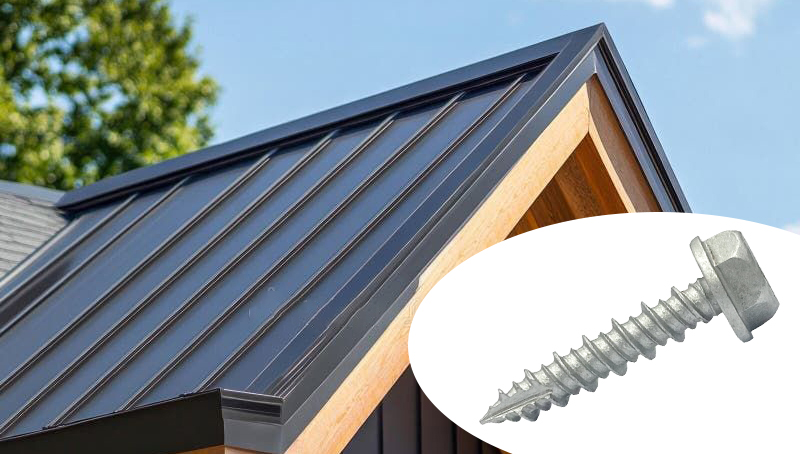
The Ruspert Hex Head Screw Type 17: The Critical Fastener for Professional-Grade Gutter Bracket Installation
Anatomy of a Specialist Fastener: Deconstructing the Type 17 Design
Look, this isn't some flimsy screw you'd use for a birdhouse. Every single piece of the Ruspert Type 17 is shaped by the particular headache of keeping a gutter stuck to a building.
That Needle-Sharp Point (The "Type 17" Bit): This thing is a go-getter. The grooved, drill-bit-like tip makes its own starter hole as you put it in, which means you can pretty much always forget about drilling a guide hole first. It chews right through the bracket and into the fascia board, saving you a whole step and making sure everything sits just right.
The Beefy Hex Head: Let's be real, those Phillips heads are the worst—they just strip out when you put some muscle into them. The hex head lets you use a regular socket or driver bit to really put the screws to it, with no fear. You crank it down to where it needs to be, without messing up the head.
The Aggressive Threading: The threads are made to bite in deep and quick into wood, holding on for dear life against the never-ending tug and strain of a gutter full of water.
The Wide, Flat Underside: Right below the head, there's a big contact patch that pushes down hard and even on the bracket. This keeps the bracket from warping or dimpling under the stress, giving you a strong, clean link.
Performance Under Pressure: Corrosion Resistance and Mechanical Strength
Let's face it, the spot where you put gutter screws is where hardware goes to die. It's always wet, it freezes solid, it thaws out, and it gets showered with whatever junk is in the runoff. A regular screw doesn't have a prayer.
The Suit of Armor: The Ruspert Type 17 is made from stiff, hardened steel and then gets a serious shield—we're talking a thick galvanized coat or a rugged polymer finish. This suit is what stops those gross rust trails from bleeding down your paint and, way more important, keeps the screw itself from slowly turning to dust.
Brute Strength: These screws are constructed to bear a burden. They're built to manage the straight-down heaviness of a waterlogged gutter, the crushing load of winter ice, and the yanking force of stuck leaves without giving way, stretching out, or breaking in two. That muscle is what stops the gradual droop or the total, catastrophic pull-out.

Installation Advantages: Efficiency and Reliability On-Site
For the person running the driver, these smart design bits turn into actual, real-world perks that make the whole day less of a grind.
Less Fussing, More Doing: No more dancing between a drill bit and a driver bit for every. single. screw. The self-starting tip means you grab your driver and just get after it. Those saved seconds turn into saved hours when you're doing a whole house.
Results You Can Trust: Because the hex head almost never strips and the point finds its own way, you end up with the same good, tight seat on every fastener. That trustworthiness means you aren't accidentally leaving a loose bracket behind or getting a phone call because something shook itself free.
It Handles Whatever You Throw At It: Whether you're driving into old, hard timber fascia, new composite trim, or even skinny metal lining, this screw is set up to deal with it. That flexibility means it's the only screw you need to pull out of your pouch for this task.
Technical Specifications & Best Practice Guidelines
Using the good screw the correct way is the final key. Here’s the no-nonsense method.
Picking Your Size: The thickness is usually a solid 5.5mm to 6.3mm. For how long it should be, the number one rule is the screw has to get into the actual solid wood behind the fascia board by at least an inch (25mm). That normally means a 2 to 3-inch (50-75mm) screw is your best bet.
Your Go-To Gear: A cordless impact driver is king here, with a brand-new 6mm (1/4 inch) hex driver bit. A sharp bit won't slip and wreck the screw head.
The Step-by-Step:
Get your gutter bracket lined up exactly where it needs to live.
Set the screw and drive it in straight until the head is down snug and flat on the bracket. You'll feel it get properly tight—just stop before you get overzealous and strip the wood or bend the metal.
Put a screw in every single hole the bracket maker included. Don't try to get clever and skip one; they drilled those holes for a purpose.
Cost-Benefit Analysis: Evaluating Total Cost of Ownership
Okay, sure, a box of these might run you a couple more bucks at the register. But we need to talk about the actual expense.
You're Buying Your Own Time Back: The work minutes you save by not drilling a pilot hole for every bracket? That saving alone often pays for the better screws before you're even done with the first side of the house.
The Staggering Cost of a Mess-Up: What's the bill for a return trip to fix it? What's the damage from repairing rot or water marks caused by a gutter that ripped off? It absolutely smashes the price of a box of top-shelf screws. Using the proper fastener is the most affordable guarantee you can get.
Confidence is Part of the Package: Knowing your work is going to hold up for years, and being able to put your name on it without a second thought, builds a track record for quality that's worth way more than pinching pennies on materials.