
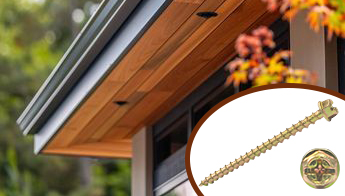
Optimized Design for Engineered Wood Substrates
Your everyday wood screw is designed for a solid piece of pine or oak. Try forcing that into chipboard, and it's kinda like trying to use a regular sneaker to go mountain climbing—you're not going to get the traction you're hoping for. These screws? They're engineered differently right from the start because they're only meant for this one specific task.
Those Threads Mean Business: They've got these wider-spaced, deeper, really grabby threads that actually want to sink into the softer, sometimes almost fluffy center of particleboard and MDF. They kind of pull themselves through nice and steady instead of just shoving the material out of the way, which is what stops it from cracking or chipping out on the other side.
They Get The Ball Rolling Themselves: That needle-sharp point at the end isn't just there by accident. It lets the screw sort of drill its own pilot hole as you're driving it in, which can totally save you from having to stop and pre-drill every single hole you need. It slices through the stuff clean.
The Head Has Your Back: That wide, built-in washer that's part of the head? That's the secret sauce. It works like a little tiny foundation, spreading out the squeezing force over a much wider spot so the head of the screw doesn't just decide to dive down and vanish into the top of your soft board—which is, like, the most frequent problem people have with the other kinds of screws.

The Dual-Drive Advantage: Unmatched Torque and Control
The combination of that slotted top and the hex washer head underneath? That's totally on purpose. It's like having your big power drill and your trusty hand screwdriver all built into one single fastener, giving you a choice for every single step of putting something together.
Hex Head for When You Need Some Serious Force: That six-sided hole in the middle lets you get at it with a socket from your wrench set, a nut driver, or just a hex bit on your impact driver. This is where you bring in the big guns. You can really lean on it and apply a ton of torque to yank those joints together super tight and get rid of any possible play, and you can do it without the bit slipping out and ruining the head.
The Slot is For Your Finishing Touches: The classic flat-head slot is what you go for when you need to be delicate. After the hex drive has pulled everything in with all its strength, you can drop in a regular flat-head screwdriver for that last little quarter-turn of precision, or to reach into a cramped spot where your big wrench would never fit. It's ideal for making those tiny, perfect adjustments.
It's Got a Backup Plan Built Right In: This whole two-in-one setup is just really clever for peace of mind. If the hex part ever gets chewed up from a lot of use, guess what? You've still got the good old slot there as a fallback. It rescues the screw and saves your project from turning into a disaster with a stripped head, whether you're the one building it now or the person trying to fix it five years from now.
Enhanced Performance and Long-Term Reliability
When you stop and add up all of these thoughtful design features, what you actually end up with is a finished project that's simply more robust, appears more professional, and doesn't fall apart on you.
It Grips and Doesn't Let Go: All those deep threads get a hold of way more of the material's little fibers, creating a connection that's seriously tough to break. This means the shelves you put up aren't going to start drooping and the corners of your cabinet aren't going to get loose over the years, because this screw fights against being yanked back out like nothing else.
It Leaves a Nice, Tidy Look: That wide washer head makes a uniform, flush little dent every single time you set one. It appears neat and intentional if the screw is meant to be seen, and it gives a perfect, steady base if you're planning to pop a plastic cap over it or hide it with some wood filler.
It Saves You a Bunch of Headaches: By pretty much doing away with splits, stripped heads, and screws that pull straight through the board, these things cut down on wasted time, wasted wood, and that terrible moment when you realize you have to start a part of your project all over again. They make the entire building process feel more fluid and dependable, which is really all you want when you're just trying to finish up and feel good about what you made.